
Yes, a severe roof leak can cause a plasterboard ceiling to sag and potentially collapse if water saturates the ceiling lining, insulation and fixings above it.
Posted by Tom Connor, 20th August 2026
Tom Connor, owner of Metropolitan Roof Repairs, has more than 30 years of roofing experience across Melbourne. Tom and the team regularly investigate leaking roofs where the first visible warning inside the home is a spreading stain, damaged plasterboard or a ceiling beginning to bow.
If your ceiling is visibly sagging, cracking, dripping heavily or affected around lights or electrical fittings, keep people out of the immediate area rather than trying to investigate it from underneath. The priority is to make the area safe and stop the water entering through the roof.
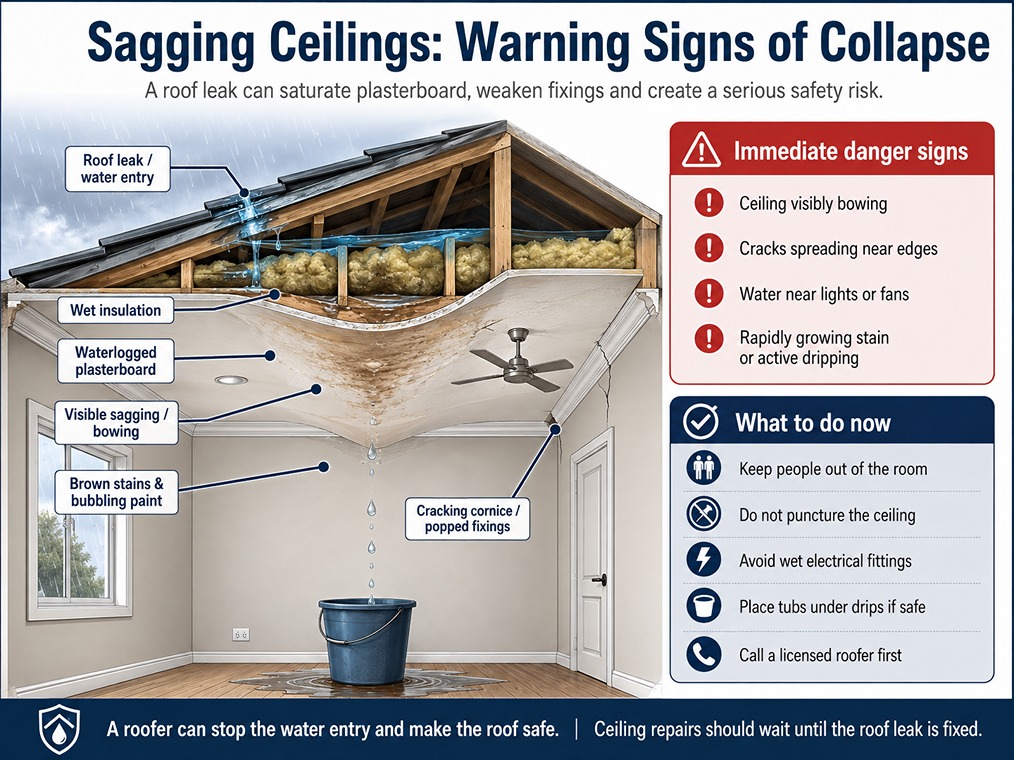
How Can a Roof Leak Make a Ceiling Sag?
Plasterboard is a ceiling lining fixed to timber or metal framing. It is not designed to support a pool of water above it.
When water enters through damaged tiles, flashing, valleys or another roof defect, it can soak insulation and reach the upper surface of the plasterboard. The plasterboard can soften, its paper facing and fixings can become compromised, and the additional weight of wet insulation and trapped water places increasing stress on the ceiling.
Water weighs approximately one kilogram per litre, so even a relatively small amount accumulating above a ceiling can add substantial weight. If enough of the ceiling becomes saturated, it may begin to bow between its fixing points or separate from the framing.
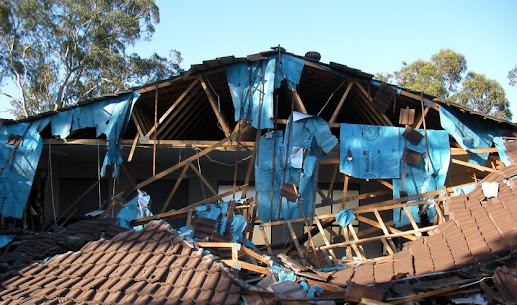
Warning Signs a Water-Damaged Ceiling May Be Failing
A roof leak does not always lead to ceiling collapse, but several visible changes should not be ignored.
Brown Water Stains or Bubbling Paint
A growing brown or yellow stain is often one of the first visible signs that moisture has reached the plasterboard. Paint may also blister, bubble or peel as moisture works through the ceiling surface.
A stain does not necessarily mean the ceiling is about to fall, but a stain that is rapidly expanding during rain indicates active water entry that needs investigation.
Visible Bowing or a Bulge in the Ceiling
This is considerably more serious. Look across the ceiling rather than directly underneath it. If a previously flat area is dipping or bulging between the framing members, the plasterboard and material above it may be holding water.
Do not stand beneath a visibly sagging section to inspect it.
New Cracks, Cornice Movement or Popped Fixings
Cracks can occur for many reasons, but new cracking accompanied by water damage, visible bowing or movement around the cornice deserves urgent attention. Fixings may also become visible as the ceiling lining moves away from the framing.
Should You Poke a Hole in a Sagging Ceiling?
No. Do not deliberately puncture a sagging or waterlogged ceiling yourself.
Although online advice sometimes recommends piercing a ceiling bulge to release trapped water, doing so requires you to stand directly beneath material that may already be weakened.
There are three particular risks:
- Ceiling collapse: disturbing softened plasterboard may cause a larger section to detach unexpectedly.
- Electricity: wiring, lights and other electrical equipment may also have been affected by water.
- Asbestos: some older homes can contain asbestos-containing ceiling or other building materials that should not be disturbed without appropriate assessment.
What Should You Do if the Ceiling Is Sagging?
- Keep people and pets out of the affected area.
- Do not touch wet lights, fans, switches or electrical fittings.
- Do not puncture, push or test the sagging plasterboard.
- Use containers only if they can be positioned without standing beneath the damaged ceiling or approaching electrical hazards.
- Arrange for the source of the roof leak to be located and made safe.
If water is actively entering through the roof, our leaking roof repair team in Melbourne can locate the external defect and determine what roofing work is required to stop further water entry.
Fix the Roof Before Repairing the Ceiling
Replacing damaged plasterboard before fixing the roof defect only treats the visible consequence of the leak. If the entry point remains open, the next period of heavy rain can wet the new ceiling again.
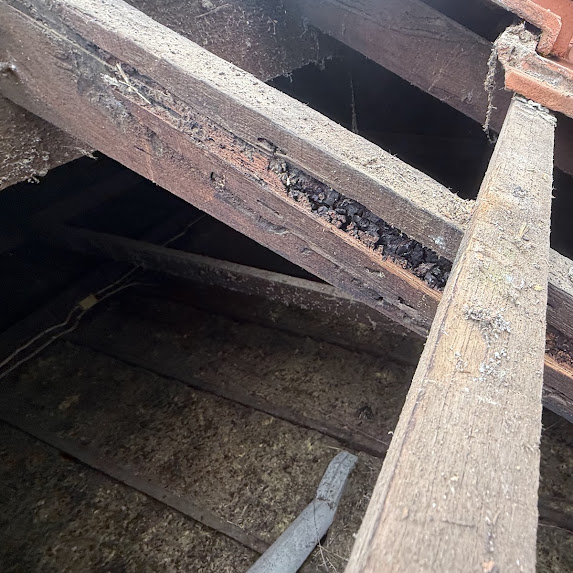
The roof should first be inspected to identify problems such as broken or displaced tiles, failed flashing, deteriorated valleys, damaged roof penetrations or drainage problems. Depending on what is found, this may require a localised roof repair or more extensive work where deterioration affects a larger area.
For roofs with broader age-related deterioration, it may also be appropriate to consider whether a roof restoration is warranted rather than repeatedly repairing individual defects.
Once the source of water entry has been repaired, the ceiling cavity, insulation and plasterboard can be properly assessed before internal repairs begin.
Does Wet Plasterboard Need to Be Replaced?
Not every ceiling stain means the entire ceiling needs replacing. The decision depends on how wet the plasterboard became, how long it remained wet, whether it has softened or bowed, and whether the fixings or insulation have been affected.
Plasterboard that has significantly sagged, softened or delaminated may need to be removed and replaced rather than simply dried and repainted. Wet insulation may also require assessment or replacement.
Moisture trapped above the ceiling can create other problems even after the visible leak has stopped. Our guide to roof leaks and ceiling mould explains how persistent moisture can affect insulation, timber and concealed areas of the roof cavity.
What If the Ceiling Damage Is Part of an Insurance Claim?
If the damage occurred during a storm, photograph the ceiling, visible water entry and affected belongings before cleaning up where it is safe to do so. Contact your insurer and ask what documentation or emergency work they require before authorising major repairs.
Whether the damage is covered depends on your individual policy and what caused the leak. See our guide to roof leaks and home insurance for a more detailed explanation of storm damage, existing roof problems, make-safe work and insurance assessments.
Is Your Ceiling Sagging After a Roof Leak?
Metropolitan Roof Repairs has been working on Melbourne roofs since 1999. Our team can locate the source of water entry, make the roof safe and complete the external roofing repairs required before ceiling restoration begins.
Our permanent roofing work is backed by a 10-year workmanship guarantee.
Call for a Free QuotePrefer to send us the details? Tell us about your roof leak online.
Sagging Ceiling FAQs
Can a leaking roof really cause a ceiling to collapse?
Yes. If enough water reaches the ceiling cavity, it can saturate insulation and plasterboard, add substantial weight and weaken the ceiling lining or its fixings. Visible sagging should be treated as a potential collapse hazard.
How do I know if a sagging ceiling is dangerous?
Keep clear if you can see obvious bowing, a growing bulge, active dripping, spreading cracks or movement around cornices and fittings. Water around lights, fans or other electrical fittings introduces an additional electrical hazard.
Should I puncture a bulging ceiling to let the water out?
No. Puncturing weakened plasterboard requires you to stand beneath the damaged area and may trigger further failure. There can also be concealed electrical wiring or, in some older homes, asbestos-containing materials.
Do I call a roofer or plasterer first?
The source of the water should be identified and stopped before permanent plaster repairs are completed. Once the roof is secure and the ceiling cavity can be safely assessed, a plasterer can determine what internal material needs repairing or replacing.
Can a water-damaged plasterboard ceiling simply dry out?
Minor moisture exposure does not always mean replacement is required. However, plasterboard that has softened, significantly bowed, delaminated or lost secure fixing may require replacement. The surrounding insulation and cavity should also be checked.
Does home insurance cover a collapsed ceiling caused by a roof leak?
It depends on the cause of the leak and the wording of your policy. Sudden storm damage and long-term deterioration can be treated differently by insurers. Contact your insurer and see our roof leak insurance guide for more information.