Whether home insurance covers a leaking roof in Australia usually depends on what caused the leak: sudden damage from an insured event such as a storm may be covered, while gradual deterioration, wear and tear or unresolved maintenance issues may be excluded depending on your policy.
Posted By Tom Connor, Owner of Metropolitan Roof Repairs, 20 August, 2026
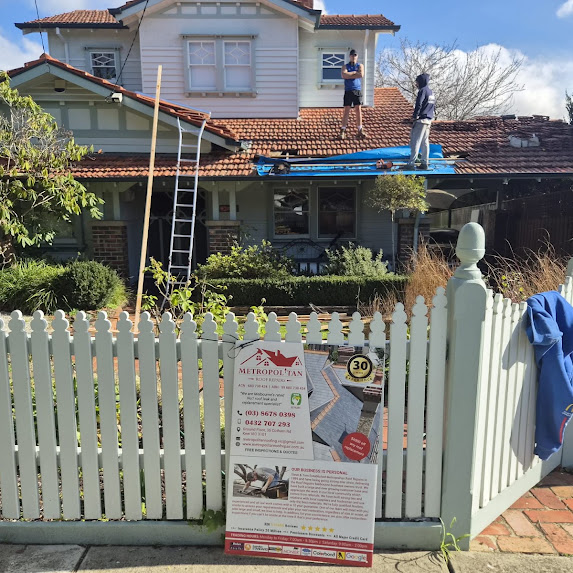
Tom and the Metropolitan Roof Repairs team have more than 30 years of roofing experience across Melbourne, regularly inspecting leaking and storm-damaged tile, slate and metal roofs. A roofer can identify and document the apparent cause of water entry, but the insurer ultimately decides whether the damage is covered under the individual policy.
Every policy is different. Check your Product Disclosure Statement (PDS) and contact your insurer directly before relying on general guidance. ASIC’s Moneysmart home insurance guide explains how to check insured events, exclusions, limits and other policy conditions.
Why the Cause of a Roof Leak Matters
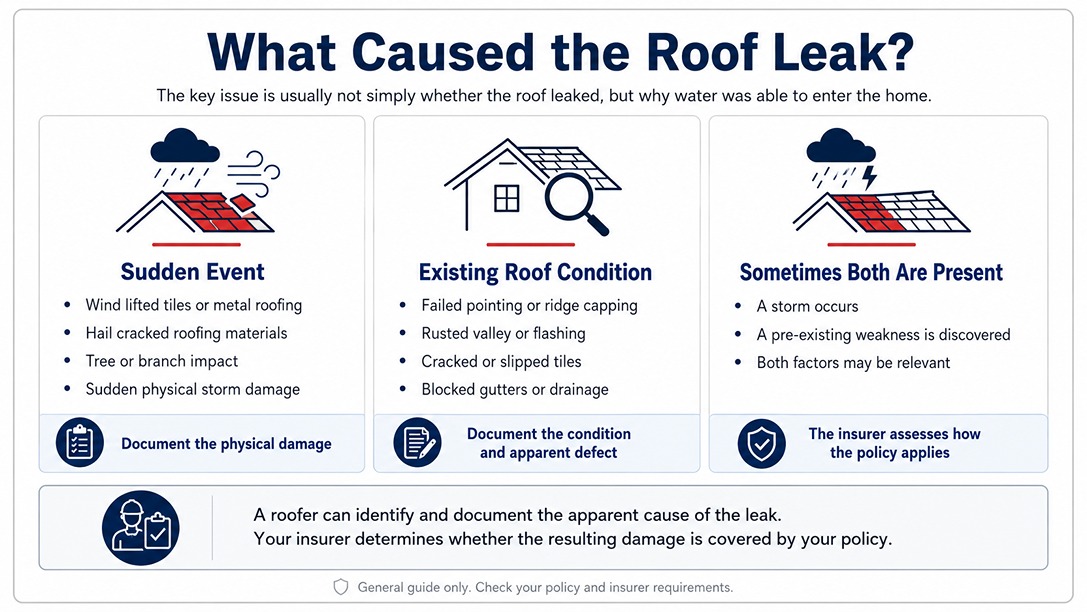
The fact that water entered during a storm does not automatically establish why the roof leaked. A storm may cause new physical damage, expose a weakness that was already present, or both may be relevant.
When Storm Damage May Form Part of a Claim
Home insurance policies can include cover for defined events such as storms, but the wording differs between insurers and policies.
Damage worth documenting after severe weather may include:
- wind lifting or dislodging tiles, slate or metal roofing;
- hail cracking or breaking roofing materials;
- a branch or debris striking the roof;
- damage to flashing, valleys or roof penetrations; and
- sudden water entry following identifiable physical roof damage.
Take photographs where it is safe to do so and note when the damage occurred. Historical weather information can also be checked through the Bureau of Meteorology if the insurer asks for details about local conditions.
When Existing Roof Problems Complicate a Claim
Storms often reveal problems that have been developing gradually. Deteriorated ridge pointing, rusted valleys, cracked or slipped tiles, failed flashing and blocked drainage can all create pathways for water.
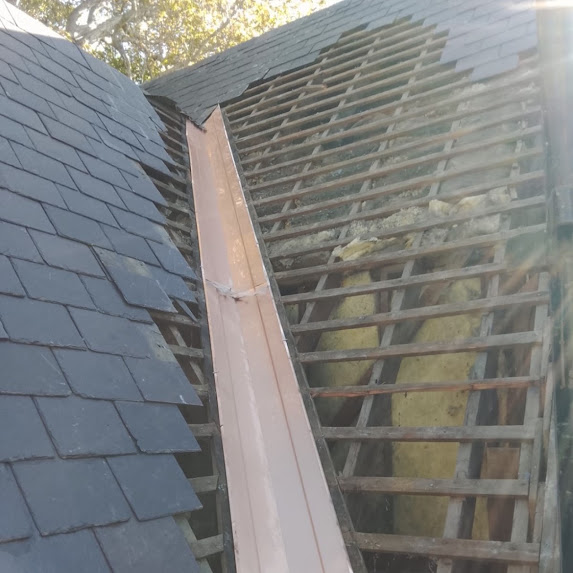
If the insurer believes wear, deterioration or maintenance contributed to the loss, that may affect how the claim is assessed. Ask the insurer to identify what it has accepted, what it has not accepted and the relevant policy wording.
Where the roof has widespread age-related deterioration rather than a single localised defect, a roof restoration in Melbourne may also be worth discussing separately from the insurance claim.
What to Do Immediately After a Roof Leak
If water is actively entering the house:
- Stay off the roof. Wet tiles, metal roofing and storm-damaged structures can be extremely dangerous.
- Photograph and video the damage. Do this before cleaning up where practical.
- Move belongings away from incoming water if it is safe to do so.
- Record the date and approximate time the leak became apparent.
- Contact your insurer promptly and ask what they want you to do next.
- Keep your records. Save claim numbers, emails, photographs, reports, invoices and written approvals.
What Is a Roof Make-Safe?
A make-safe is temporary work intended to reduce further damage while the roof is assessed or permanent repairs are organised. Depending on the situation, it may involve tarping an exposed area, securing damaged materials or temporarily controlling a point of water entry.
It is not the same as permanently repairing the roof. Your insurer may have preferred contractors or specific requirements, so ask before arranging work whenever circumstances allow.
If water has reached the ceiling cavity, moisture can remain in insulation and concealed building materials even after the dripping stops. Our guide to roof leaks and ceiling mould explains what to look for next.
What a Professional Roof Inspection Can Document
The stain visible on a ceiling is not necessarily directly below the roof defect. Water can travel along roofing components and framing before becoming visible inside the room.

A professional inspection may document:
- the apparent point of water entry;
- broken, displaced or deteriorated roofing materials;
- the condition of flashing, valleys and ridge capping;
- rust, corrosion or other existing conditions;
- gutter and drainage issues; and
- photographic evidence of the roof’s condition.
Metropolitan Roof Repairs provides roof repairs in Melbourne and can inspect active leaks, identify the apparent source of water entry and provide photographic reporting. If the issue requires urgent attention, see our leaking roof repairs in Melbourne service.
The inspection provides technical information about the roof. It does not determine whether an insurer must accept a claim.
What If Your Roof Leak Claim Is Declined?
If you disagree with an insurer’s decision, ask for the reasons in writing, including the relevant policy or PDS sections and any assessment or expert reports relied upon.
Raise the matter through the insurer’s internal complaints process first. If it remains unresolved, the Australian Financial Complaints Authority (AFCA) can consider eligible complaints involving home building insurance and claim decisions.
Need Help Identifying the Cause of a Roof Leak?
Metropolitan Roof Repairs has been working on Melbourne roofs since 1999. If your roof is leaking, our team can inspect the damage, identify the apparent source of water entry and explain the roofing work required.
Prefer to send us the details first? Tell us about your problem online.