
Posted by Tom Connor, 30th July 2026
A leaking roof can leave saturated insulation, hidden mould and timber damage inside the ceiling cavity long after the visible dripping has stopped.
When water starts leaking through your roof, it is natural to focus on the visible stain spreading across the plasterboard. However, the water you can see from inside the room is often only part of the problem. The more serious damage may be developing above the ceiling, where moisture can remain trapped against insulation, timber and plasterboard.
Tom and the Metropolitan Roof Repairs team have spent more than 30 years inspecting leaking tiled, slate and metal roofs across Melbourne. One of the recurring problems we see is that homeowners understandably repair or repaint the ceiling before the original roof defect has been properly identified.
Effective leaking roof repairs in Melbourne must stop the external water entry first. Until the broken tile, failed flashing, rusted gutter or other roof defect is repaired, mould remediation and internal ceiling work are unlikely to provide a lasting solution.
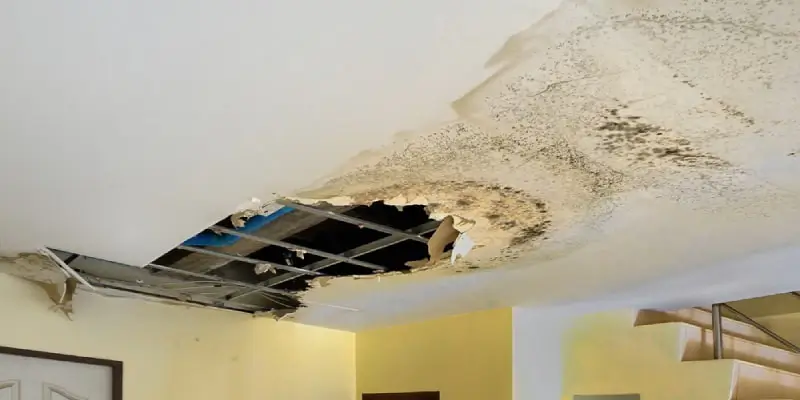
Why Roof Leaks Cause Mould Growth
A ceiling cavity can provide ideal conditions for mould. It is enclosed, receives very little natural airflow and contains several materials that can retain moisture after a roof leak.
When a cracked tile, damaged valley or degraded section of flashing allows rainwater into the roof space, that moisture may come into contact with timber battens, ceiling joists, dust, insulation and the paper surface of plasterboard.
Because these materials are hidden from view, the cavity may remain damp well after the rain stops. By the time a musty smell or dark ceiling marks become noticeable inside the room, mould may already be established above the plasterboard.
The Problem With Wet Ceiling Insulation
A common misconception is that the ceiling cavity will simply dry once the rain stops. In many homes, insulation prevents this from happening quickly.
Fibreglass, cellulose and other insulation materials can hold moisture and spread it laterally across the ceiling. This means a leak entering through one section of the roof may saturate a much wider area before water finally appears inside the room.
What Saturated Insulation Can Cause
Wet insulation can affect the safety, energy efficiency and condition of the surrounding ceiling structure.
Does Wet Ceiling Insulation Need Replacing?
Insulation that has become heavily saturated often needs to be removed and replaced. Whether it can be dried safely depends on the insulation material, how long it has remained wet, the extent of contamination and the condition of the surrounding ceiling cavity.
The roof leak must be repaired before new insulation is installed. Otherwise, the replacement material may become wet during the next period of rain.
Identifying Mould Before It Spreads
You should not climb into a wet ceiling cavity to look for mould yourself. Instead, look for changes that can be identified safely from inside the home.
A Persistent Musty Smell
A damp or earthy odour with no obvious source may indicate wet insulation or mould developing above the ceiling. This smell can become stronger after rain or when the room has been closed for several hours.
Brown Water Stains
A light brown or yellow ring generally shows where water has pooled and dried within the plasterboard. The stain identifies the area affected by moisture, but it does not necessarily identify the original point where water entered the roof.
Dark or Speckled Growth
Black, green or yellow speckling within a ceiling stain or around the edges of the room may indicate mould growth. The visible marks may represent only the lower surface of a larger affected area within the roof cavity.
Sagging or Soft Plasterboard
Plasterboard that appears swollen, bowed or soft has absorbed a significant amount of moisture. Keep people away from the area because saturated ceiling material can fail without warning.
What Hidden Roof-Leak Damage Can Look Like
Water entry is not always directly above the visible stain. Moisture may track along roofing materials and timber before collecting in insulation or reaching the ceiling below.
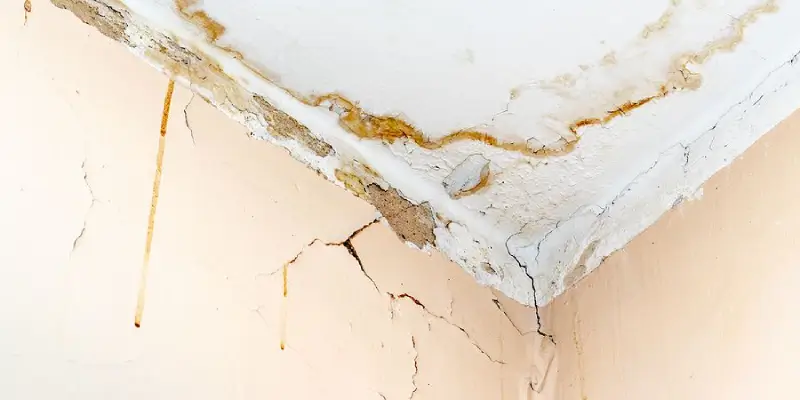
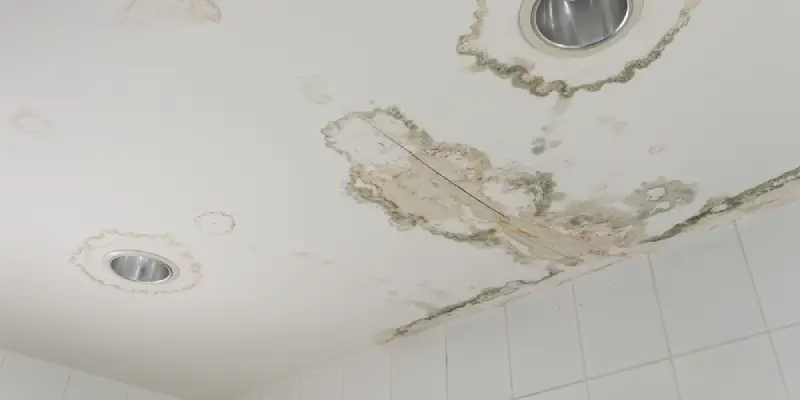
Securing the Roof to Stop Moisture Returning
You cannot effectively dry a ceiling cavity, replace insulation or complete permanent plaster repairs while the roof above remains compromised. The source of the water must be found and permanently repaired first.
Metropolitan Roof Repairs inspects the wider roof area rather than assuming the defect is directly above the visible stain. Depending on the roof and the path taken by the water, the inspection may include:
- cracked, slipped or missing roof tiles
- deteriorated ridge capping and pointing
- rusted or poorly sealed roof flashing
- blocked valleys and box gutters
- damaged gutters and downpipes
- roof penetrations around chimneys, vents and skylights
- corrosion or failed fixings on metal roofing
Some water-entry problems involve regulated drainage or flashing work and require professional roof plumbing in Melbourne. Where gutters are overflowing because water cannot discharge effectively, damaged or blocked components may also require downpipe repairs.
Once the external defect is repaired, the insulation, framing and plasterboard can be assessed to determine what needs to be dried, removed or replaced.
Repair the Roof Before Repairing the Ceiling
Painting over a ceiling stain or replacing damaged plasterboard does not resolve the source of the moisture. If the roof remains vulnerable, the same area may become wet again during the next storm.
- Identify the entry point: Inspect the roof covering, flashing, valleys and drainage components.
- Complete the roof repair: Replace or repair the defective roofing component.
- Assess the cavity: Check insulation, timber and plasterboard for retained moisture and mould.
- Dry or remove affected materials: Saturated or contaminated insulation may need replacement.
- Repair the internal ceiling: Complete plaster and painting work only once the cavity is confirmed dry.
For broader repairs involving tiles, ridge capping, valleys or deteriorated roof sections, learn more about our roof repair services in Melbourne.