
Posted by Tom Connor, 24th June, 2026
A Heritage Overlay in Victoria is a local planning control that requires homeowners to obtain a permit for specific external renovations to preserve the area’s cultural significance. Contrary to common myths, it does not completely prevent property updates or typically restrict internal changes.
If you’ve discovered your home sits in a “Heritage Overlay” on a planning map, it can be a bit of a shock. What does it actually mean for your day‑to‑day life and any renovations you’ve got planned? Whether you’re looking for standard advice or need the tailored expertise of heritage roofing specialists, understanding these rules is the crucial first step.
In Victoria, a Heritage Overlay is a planning control in your local planning scheme that protects places of local heritage significance. It is implemented through Clause 43.01 of the planning scheme, with a “Schedule to the Heritage Overlay” that lists the properties and precincts covered and specifies any additional controls for each. Local councils use these controls to manage change so that important buildings and streetscapes are conserved and enhanced over time, not frozen in place.
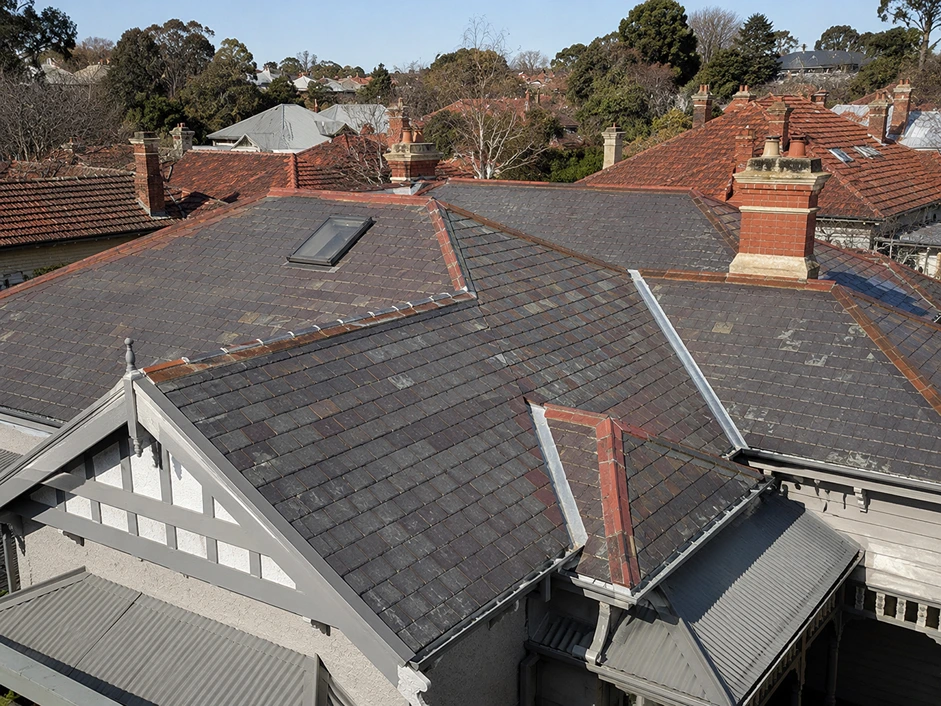
Heritage Overlay vs “Heritage Listed” vs National Trust
People often say “heritage listed” as if it’s one thing, but there are a few different layers in Victoria.
Heritage Overlay (local planning control)
The Heritage Overlay (HO) is a local planning control applied in the planning scheme where planning controls are required to conserve and enhance the cultural heritage significance of a place. When a Heritage Overlay applies, a planning permit is typically required to demolish or remove a building, construct a building or fence, externally alter a building, carry out works, or externally paint an unpainted surface, subject to the details in the Overlay schedule.
Victorian Heritage Register (state significance)
Places and objects of state‑level cultural heritage significance are included in the Victorian Heritage Register, which is administered by Heritage Victoria under the Heritage Act 2017. A place or object on the Victorian Heritage Register is legally protected, and many works — including most external works and some internal works — require a heritage permit or permit exemption from Heritage Victoria before they can proceed. Heritage Victoria has introduced general and specific permit exemptions for certain types of routine maintenance and minor works, but these operate within a formal permit framework.
National Trust Register (non‑statutory)
The National Trust of Australia (Victoria) maintains its own register of heritage places as an advocacy tool, but this listing does not in itself impose statutory planning controls. Governments and councils may, however, consider National Trust assessments when making heritage decisions.
In practice, many Melbourne homeowners who refer to a property as “heritage listed” are actually talking about a local Heritage Overlay rather than the Victorian Heritage Register.
What a Heritage Overlay Actually Does
A Heritage Overlay does not stop you from renovating; it simply means some types of change need a planning permit so council can assess their impact on heritage significance. Planning Victoria explains that the Overlay exists to conserve and enhance places of local heritage significance and their contribution to the character of an area.
Yarra City Council notes that when land is included in a Heritage Overlay, a planning permit is normally required to:
- Subdivide or consolidate land.
- Demolish or remove a building (including part of a building).
- Construct a building (including part of a building or a fence).
- Externally alter a building.
- Construct or carry out works.
- Construct or display a sign.
- Externally paint an unpainted surface.
Glen Eira City Council lists similar triggers under Clause 43.01 and its schedule, and points out that additional controls can apply to external paint, internal alterations and trees, depending on the specific Overlay entry.
The detail for your property is always in the Schedule to the Heritage Overlay, which is where you’ll see exactly which additional controls apply to your HO number.
What a Heritage Overlay Does Not Mean
There are a few myths that regularly confuse owners.
Myth 1: “I can’t renovate at all.”
The Victorian Planning Authority notes that the Heritage Overlay is applied where planning controls are required to conserve and enhance significance, not to prevent change altogether. Councils like Yarra and Glen Eira emphasise that well‑designed alterations and additions that respect the existing building and streetscape are regularly approved through the permit process.
Myth 2: “I can’t change anything inside my house.”
Internal alterations are generally only controlled under the Heritage Overlay where the Schedule to Clause 43.01 specifically applies internal alteration controls to the property. Yarra and Glen Eira both note that most Overlay properties do not have internal controls, so many internal changes do not need a planning permit under the Heritage Overlay, although a building permit may still be required.
Myth 3: “A Heritage Overlay kills property value.”
Planning Victoria’s guidance focuses on the statutory objective of conserving and enhancing heritage, and does not make claims about property values. In some Melbourne suburbs, the protected heritage character of terraces and period streetscapes is seen as part of the area’s appeal to buyers, even though heritage controls also add permitting and design constraints.
Why Councils Use Heritage Overlays
Under the Planning and Environment Act 1987, planning schemes must include provisions that conserve and enhance buildings and places of cultural heritage significance. Councils typically commission heritage studies to identify places and precincts of local significance, prepare statements of significance and gradings, and then propose Heritage Overlay controls through planning scheme amendments.
These amendments go through public exhibition, independent panel consideration and ministerial approval before the Overlay is added to the planning scheme. Councils such as Yarra and Melbourne then use heritage policies and guidelines to assess demolition, alterations and new development so that the contributory elements—façades, rooflines, chimneys, verandahs, and significant landscape features—are maintained while allowing for sensitively designed change.
Heritage Planning Permits vs Building Permits
A Heritage Overlay sits in the planning system, which is separate from the building system.
The Victorian Building Authority explains that:
- A planning permit is about whether your proposed use or development is appropriate for the land under the planning scheme and is issued by council.
- A building permit is written approval from a registered building surveyor that allows building work to proceed, confirming the work will comply with the Building Act and Building Regulations.
Frankston City Council, for example, notes that even if a planning permit is not required, a building permit may still be needed, and vice versa. So, you might not need a planning permit for a like‑for‑like roof repair under the Heritage Overlay, but still need a building permit if the work is structural or otherwise captured by building regulations.
How to Find Out Exactly What Applies to You
If you’re unsure what your Overlay actually means in practice, the basic process is:
Check if a Heritage Overlay applies
Use VicPlan to search your address and look under “Planning Scheme Overlays” to see whether an HO code applies. Many councils, including Yarra, also provide free property planning reports that list any Heritage Overlay affecting the land.
Read the Overlay schedule for your HO
Through the planning scheme or council website, access the Schedule to Clause 43.01 – Heritage Overlay and find the entry for your HO number. Check whether there are extra controls on external paint, internal alterations or trees, and whether your building is described as individually significant or contributory within a precinct.
Check the Victorian Heritage Register
Search Heritage Victoria’s online database to see whether your property is on the Victorian Heritage Register. If it is, you will need a heritage permit or permit exemption from Heritage Victoria for many works, including some internal changes.
Get early advice before spending on design
Planning Victoria and Solar Victoria both encourage owners of heritage‑affected properties to speak to council planning staff or, for Register places, to Heritage Victoria before committing to detailed plans or installations.
The Heritage Council’s “Caring for your heritage-listed property” guide recommends that you understand your responsibilities and available permit pathways early in the process.
Handled properly, a Heritage Overlay doesn’t have to be a blocker. It simply means you need to think a little more strategically about design and approvals—and that the distinctive character of your street is being actively safeguarded.
Need to repair the roof on your heritage home?
Navigating council regulations can feel overwhelming, but delaying essential roof maintenance out of confusion can lead to severe internal water damage and costly structural issues down the line.
Understanding what you can and can’t do is the first step. In many cases, timely, sympathetic repairs that respect your property’s character can be approved smoothly—or may even be exempt from planning permits entirely.
If you have a period home that needs attention and you want to ensure the work is done compliantly, speaking with heritage roofing specialists is the safest next step to protect your investment.
Need help with your heritage roof?