
Posted by Tom Connor, 30th July 2026
Discovering water leaking through your roof and dripping from the ceiling during heavy rain is stressful for any homeowner. Whether it begins as a slow drip and a growing brown stain or as water suddenly pouring into a living area, acting quickly can reduce the risk of electrical hazards, ceiling collapse and further structural damage.
Tom and the team at Metropolitan Roof Repairs have helped Melbourne homeowners identify and repair leaking roofs for more than 30 years. One of the most important things we have learned is that the place where water appears inside a home is rarely directly beneath the point where it entered the roof.
Rainwater can travel along roof battens, rafters, insulation and ceiling timbers before emerging through plasterboard several metres away. Effective leaking roof repairs in Melbourne therefore depend on finding and repairing the true source of the water rather than simply patching the visible ceiling damage.
If your roof is leaking during heavy rain, contact an experienced roofer or licensed roof plumber who can identify the entry point and determine the appropriate repair. Before professional help arrives, follow these steps to make the area safer and contain the water.
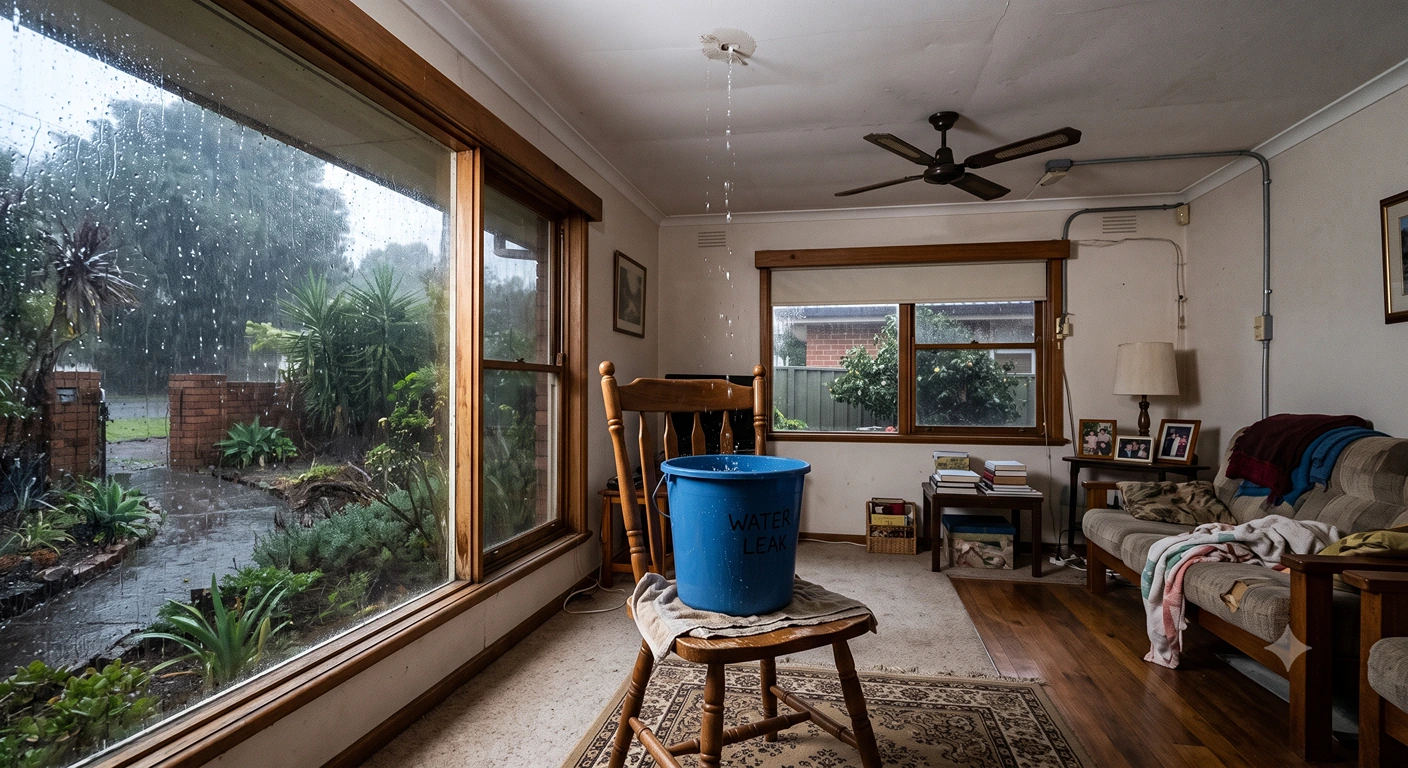
What to Do Immediately When Your Roof Leaks
Before considering a temporary repair, manage the situation inside your home. Water entering near lights, ceiling fans, switches or wiring can create a serious electrocution and fire risk.
Evacuate the Drop Zone
Move family members and pets away from the area directly beneath the leak. Wet plasterboard can hold a substantial amount of water and may collapse without warning.
Do not place a chair or ladder beneath a sagging section of ceiling. Only position a bucket beneath the drip when the ceiling appears stable and it is safe to approach.
Keep the area clearIsolate the Power Safely
If water is dripping through a ceiling light or tracking close to electrical switches, isolate the electricity only when the switchboard is dry, unaffected by water and safely accessible.
- Turn off the main power where it is safe to do so.
- Unplug appliances and move them away from the affected area.
- Do not touch wet switches, fittings or electrical equipment.
- Do not approach a wet or weather-damaged switchboard.
- Contact an emergency electrician if electrical fittings are affected.
Contain the Water
Place buckets, deep pans or heavy-duty plastic tubs beneath minor drips. Put down old towels to catch splashes and move furniture, rugs, electronics and other valuables away from the affected area.
Limit further damageDocument the Damage
Before undertaking a major clean-up, take clear photographs and videos of the active leak, ceiling stains, pooled water and damaged belongings. Your insurer may require this evidence if you make a claim.
Insurance evidenceCommon Causes of Roof Leaks in Melbourne
When trying to understand where a roof is leaking, remember that water follows the structure of the building. The spot where it reaches your ceiling may be some distance from the actual roof defect.
Based on decades of experience inspecting tiled, slate and metal roofs across Melbourne’s eastern suburbs, these are some of the most common causes.
Cracked or Slipped Roof Tiles
Terracotta, concrete and slate tiles can crack because of age, severe weather, falling branches or previous foot traffic. Even one displaced tile can allow wind-driven rain to enter the roof cavity.
Degraded Roof Flashing
Flashing seals vulnerable junctions around chimneys, skylights, walls, vents and roof penetrations. Rusted metal, cracked sealant or poor installation can create a direct pathway for rainwater.
Blocked or Rusted Box Gutters
Leaves and debris can restrict box gutters and roof valleys. During a heavy Melbourne downpour, water may back up and overflow beneath tiles, flashing or eaves before entering the ceiling cavity.
Damaged Ridge Capping
Old ridge-capping mortar can crack, loosen or crumble after years of expansion and contraction. Once the bedding and pointing fail, rain can enter beneath the ridge tiles.
Torn or Deteriorated Sarking
Sarking provides a secondary barrier beneath the roof covering. If it has torn, become brittle or was never installed, wind-driven rain that passes the tiles can reach the insulation and ceiling below.
Blocked Gutters and Downpipes
When gutters cannot discharge water quickly enough, they may overflow into the eaves or roof cavity. Damaged, blocked or incorrectly sized downpipes can contribute to the problem and may require professional downpipe repair in Melbourne.
Why Does My Roof Leak Only During Heavy Rain?
A roof may appear watertight during light rain but fail during a sustained storm. High rainfall volumes can overwhelm blocked valleys, gutters, box gutters and downpipes. Strong winds can also drive water sideways beneath slipped tiles or deteriorated flashing.
Leaks that occur only during severe weather should not be ignored. They usually indicate that part of the roof or drainage system is already vulnerable and will fail again when similar conditions return.
A professional inspection can determine whether the problem requires general roof repairs, tile replacement, flashing work, gutter repairs or specialist roof plumbing in Melbourne.
Why Delaying Roof Leak Repairs Costs More
Ignoring a minor leak because it only appears during heavy storms can allow hidden damage to continue between visible incidents.
How Metropolitan Roof Repairs Finds and Fixes the Source
Patching the visible ceiling stain will not stop a roof leak. The external point of entry must first be located and repaired.
Inspect the Roof
We assess the roof covering, ridge capping, valleys, flashing, penetrations, gutters, downpipes and other likely points of water entry.
Exterior inspectionTrace the Water Path
Because water can travel through the roof cavity, we inspect the area above and uphill from the visible ceiling stain rather than assuming the defect is directly overhead.
Leak diagnosisRepair the Underlying Defect
The required work may include replacing broken tiles, repairing flashing, restoring ridge capping, clearing valleys or repairing roof drainage components.
Permanent repairCheck the Wider Roof Area
The surrounding roof area is assessed for related deterioration that could allow another leak to develop during future periods of heavy rain.
Preventative checkExperience Across Different Roofing Materials
Metropolitan Roof Repairs works on heritage slate, terracotta tiles, concrete tiles and modern metal roofing, including Colorbond. Each material fails differently and requires the correct repair method to restore the roof’s weather resistance.
Appropriate Roof Plumbing Work
Some leaks involve gutters, downpipes, box gutters, flashing or other roof plumbing components. Where regulated roof plumbing work is required, it should be completed by a suitably licensed or registered professional and accompanied by the appropriate documentation where Victorian regulations require it.
What Happens After the Roof Leak Is Repaired?
Once the external entry point has been repaired, the roof cavity and ceiling must be allowed to dry before damaged plasterboard is replaced or repainted.
- Stop the water entry: Repair the tile, flashing, gutter, valley, downpipe or other roofing defect.
- Assess the internal moisture: Check the insulation, timber and upper surface of the plasterboard for retained water.
- Remove damaged materials: Saturated insulation or unstable plasterboard may need to be taken out.
- Dry the roof cavity: Moisture meters, air movement or mechanical drying may be needed before the area is enclosed.
- Repair the ceiling: Once dry, a plasterer or builder can replace damaged sheeting, finish the joints and repaint the area.
Do not paint over the stain until the source has been repaired and the plasterboard is completely dry. Otherwise, the stain may return and concealed mould or deterioration may continue.