
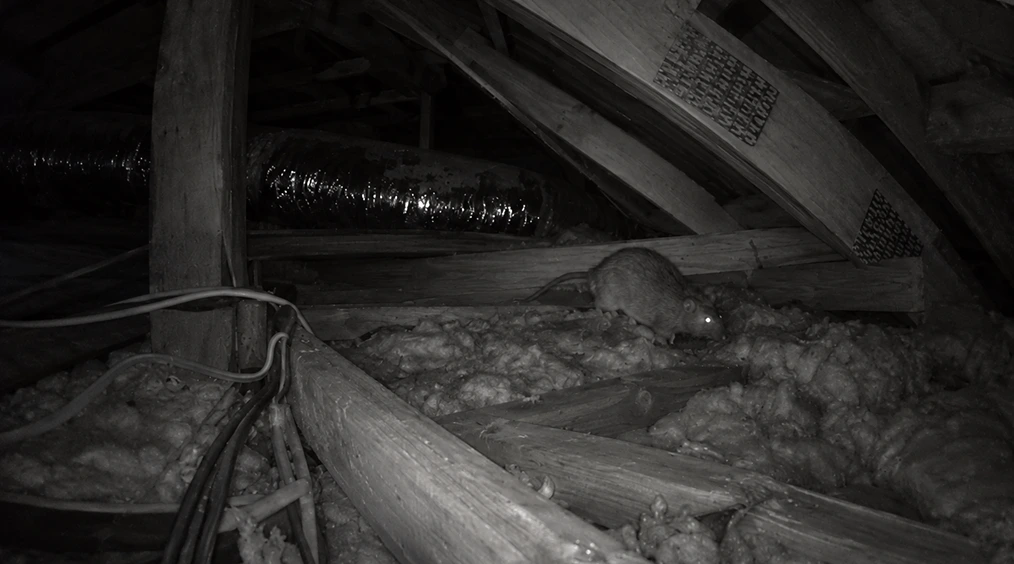
We're a roofing company, not a pest control business, so we've got no reason to talk this one up. But we see the aftermath often enough to know it's worth saying plainly: if you're hearing scratching at night and your response has been a sachet from the hardware store, it's worth understanding what that product is actually doing, and what's likely still happening above your ceiling while you wait for it to work.
Do Repellent Sachets and Plug-In Devices Actually Work?
Australia's consumer watchdog has already tested this claim in court, twice, and both times found against the manufacturer. The ACCC took Federal Court action against Danoz Direct and Emjoi Australasia over claims that their plug-in ultrasonic and electromagnetic devices would repel rats, mice and other pests, more than 240,000 units had been sold. The companies gave court-enforceable undertakings after the ACCC found the claims weren't backed by evidence. A separate case against Pest Free Australia over its plug-in device ended the same way, undertakings not to repeat claims that the device could stop pests eating, drinking or breeding. Scent-based sachets sit in murkier territory. There's no equivalent enforcement history, and some rodents will show mild, temporary avoidance of a strong new smell. But that's a long way from evidence they resolve an infestation, and most of these products are honest about their limits if you read the fine print, several are marketed as odour maskers for after an infestation, not as a way to keep rats out in the first place.What These Products Don't Do
Whether it's ultrasonic or scented, the products sold for this problem share the same gap: none of them touch the reason the rat is there.| Repellent sachets / plug-ins | What actually stops rats | |
|---|---|---|
| Seals the entry point | No | Yes |
| Removes existing rats | No | Yes, with proper baiting or trapping |
| Backed by regulator findings | ACCC found ultrasonic claims unsubstantiated | Licensed pest control is the Victorian Government's recommended route |
| Addresses breeding | No | Yes, once the source is dealt with |
A rat that's mildly put off by a smell in one corner of the roof cavity doesn't leave, it just moves to a different corner.
The Real Risk of Leaving It Unchecked
While a sachet sits quietly doing very little, rats and mice don't sit still. They gnaw constantly to keep their teeth in check, and electrical wiring is a common target, Australian public health guidance specifically flags gnawed wiring as a fire risk in homes. Roof cavities are also where wiring, insulation and nesting material all end up in close proximity, exactly the combination that turns a rodent problem into an electrical one. Rats and mice can also live and breed indoors indefinitely as long as they've got food, water and shelter, which a roof cavity usually provides all three of. A sachet doesn't change that equation. Left unchecked, what started as one set of footsteps at night can become a much bigger job, chewed wiring, damaged insulation, and timber damage that often isn't obvious until it's significant.Not Every Roof Noise Is a Rat
Rats and mice cause most of what we see, but not all of it, and knowing which animal it actually is changes both the fix and how much damage it can do to the roof itself.Rats vs Mice
Both are common in Melbourne roof cavities, and the difference matters for sealing, not just identification. Victorian Government guidance notes mice can squeeze through gaps as small as 8mm and gnaw holes up to about 20mm across, while rats need closer to 80mm. Sealing every rat-sized gap can still leave the smaller ones open for mice.Birds
Two species do most of the damage in Melbourne roof spaces, the Common Myna and the Common Starling. Mynas have a genuinely local history, they were introduced in Melbourne itself in 1862 to control insects in market gardens, and have been nesting in roof cavities and eaves ever since. Starlings do the same and bring bird lice into the roof space with them. Both are cavity nesters that pack a roof space with material rather than build something tidy, and this creates a real fire risk once it sits against wiring. There's a structural cost too. Nesting material that ends up in gutters and valleys blocks drainage, and water pooling against roof timber is exactly what causes rot, the same process as a leaf-blocked gutter, just with feathers involved.Possums
If it's heavier footsteps and mostly active from dusk, it's almost certainly a Common Brushtail Possum, the species Victorian Government guidance confirms actually enters roof cavities. The Common Ringtail Possum, smaller and building a leafy "drey" nest in trees, rarely comes inside at all. We've covered possums properly, including their protected status, in our guide on what's getting into your roof through a damaged fascia.Cats
Rarer, but it happens, a cat chasing something or investigating a gap can end up genuinely stuck, including documented cases here in Melbourne. If there's any chance what you're hearing could be a trapped animal rather than a pest, don't seal the gap or set bait until you've ruled that out. It's a welfare situation first, call a vet or the RSPCA, not a pest control job.What Actually Works
Two things need to happen, and neither of them is a sachet. Deal with the rats. The Victorian Government's Better Health Channel is direct about this: if the problem is too difficult to manage yourself, hire a professional who holds a current Pest Control Licence. You can check the licensed pest control operator register directly, or contact the Australian Environmental Pest Managers Association for guidance. This isn't something Metropolitan Roof Repairs does, and we'd rather point you to someone who's actually licensed for it than pretend otherwise. Deal with the entry point. This is where we come in. Rats don't appear in a roof cavity out of nowhere, they're getting in through a gap somewhere in the roof itself, whether that's a damaged fascia board, broken or lifted tiles, worn ridge capping, or gaps around flashing and roof penetrations. We've written separately about fascia damage specifically if that's what you're seeing, but the broader point holds for any part of the roofline: find the gap, close it properly, and the problem stops recurring. Treating the rats without closing the entry point just means the next lot moves in. Closing the entry point without dealing with an active infestation leaves the current problem still going. You generally need both.When It's a Roof Problem, Not Just a Pest Problem
If the noise is coming from the roofline itself, sagging gutters, cracked or missing tiles, deteriorating flashing, or daylight showing through gaps anywhere in the roof, that's our territory. We'll inspect the roof, identify how something's getting in, and carry out the repair, whether that's roof carpentry, a specific fascia repair, or a broader roof repair. For the pest itself, a licensed operator remains the right call.Think Something's Getting In Through the Roof?
Metropolitan Roof Repairs has been working on Melbourne roofs since 1999. We'll inspect the roofline, identify what's causing the problem, and give you a clear, upfront quote.
Prefer to send us the details first? Get your quote online.
Why Homeowners Choose Us
- 30+ years of experience delivering roof carpentry and repairs across Melbourne
- Fully insured, licensed roof carpenters and proud members of the Master Builders Association
- 200+ 5-star reviews from Melbourne homeowners
- Heritage and modern homes, all roof types
- Upfront pricing, no surprises