A board's cracked or sagging, so it's a weekend trip to Bunnings: treated pine, galvanised screws, maybe forty to sixty dollars all up. Pull the old board off, screw the new one on, job done in an afternoon.
It sounds completely reasonable, and for most small home repairs, it is. Fascia is the exception, not because the materials are different, but because of what's often behind the board and what year the house was built. Neither of those show up on the shelf at Bunnings.
This guide covers why people take this job on themselves, what actually happens when they do, and the two risks that make DIY fascia repair different from most other weekend jobs.
For the actual repair process and costs, see our fascia board repair guide.
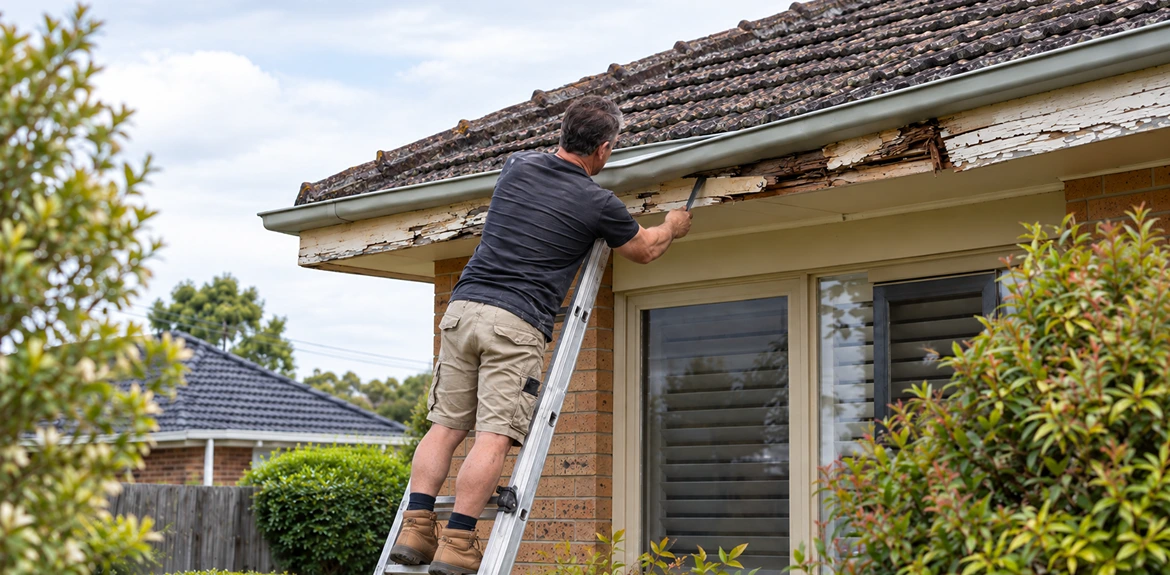
It Looks Like a Forty Dollar Job From Bunnings
Materials are the cheapest part of any repair. Treated pine, a tin of paint, some screws, none of it requires a trade licence to buy. That's exactly why the job looks smaller than it is. The real barrier isn't the materials, it's everything you can't see from the hardware aisle: how the board's fixed at the roofline, what's sitting behind it, and whether the house is old enough for that board to be something other than timber. We see this time and time again: a straightforward-looking repair turns into a call to us once someone's pulled a board back and found out what's actually there.Saving the Call-Out Fee
Cost is the single biggest reason Australians take repairs on themselves.- 40% of homeowners have attempted DIY repairs specifically to save money
- 77% are tackling small repairs and maintenance like this, not full renovations
- $1,500 is the average cost of fixing damage from a DIY job gone wrong
- $3.53 billion is what that adds up to nationally, every year
- 1 in 5 DIY repairs end up needing a professional to fix or redo anyway
Source: hipages research.
That last figure is the one worth sitting with. It means the money saved upfront is often spent twice over, once on the failed attempt, and again on the proper repair.I Couldn't Get a Tradie Out Anyway
The second driver isn't about money, it's about access. Trade apprenticeship numbers have sat at historic lows for years, and in high-demand categories homeowners can face long waits and premium pricing just to get someone out to look at the job. When a quote takes two weeks and the fascia's actively letting water in, doing it yourself starts to feel like the only responsive option, even when it isn't the safest one.I've Done Jobs Like This Before
Confidence plays a bigger role than people admit, and it's not irrational, plenty of home repairs genuinely don't need a professional.- 46% of Australian men say DIY gives them a greater sense of satisfaction
- 38% say they genuinely enjoy working on their home
- 64% say they'd hire a tradie specifically because they know they lack the skills
Falls From Height: The Risk People Underestimate
Fascia sits at eaves height, typically 2.5 to 4 metres on a Melbourne home, low enough to feel manageable. National data shows 70 worker deaths from falls in Australia between 2022 and 2024, around 13% of all workplace fatalities. About half of all fatal falls involved a height of three metres or less, which is roughly eaves height. Falls from ladders are consistently one of the most common causes, and fascia repair fits the pattern: a ladder on uneven ground, an awkward sideways reach, and a job that runs long enough for fatigue to set in. We've been called to jobs where the DIY attempt stopped halfway along the roofline, not because of the height itself, but because reaching sideways off a ladder is far less stable than it looks from the ground.Asbestos: The Hidden Risk in Older Melbourne Homes
If a home was built or renovated before 1990, there's a real chance its fascia, eaves or soffit lining contains asbestos, and it's frequently impossible to tell just by looking. Asbestos-cement sheeting, sold under names like Hardiflex or Villaboard, was used in over 3,000 building products before being phased out, and eaves and soffit linings are one of the most common places it turns up, usually painted to match the rest of the house. It's a scenario we see often: a homeowner starts prising off an old board painted the same colour as the rest of the eaves, with no idea it could be anything other than timber. Asbestos is only dangerous once it's disturbed, cut, drilled, sanded or pried off, precisely what that kind of repair involves. Left alone, painted and intact, it isn't an emergency. The risk starts the moment someone begins working on it without knowing what it is.What to Do Instead
Get the roofline assessed first, before any board comes off. If asbestos is suspected, that's where the job stops until a licensed assessor has been in. If it's a straightforward timber repair, our fascia repair guide covers exactly what that involves and what it costs, properly accessed and correctly fixed the first time.Thinking About Tackling Fascia Repair Yourself?
Metropolitan Roof Repairs has been working on Melbourne roofs since 1999. We'll assess the roofline safely, flag any asbestos risk before work starts, and give you a clear, upfront quote.
Prefer to send us the details first? Get your quote online.
Why Homeowners Choose Us
- 30+ years of experience delivering roof carpentry and repairs across Melbourne
- Fully insured, licensed roof carpenters and proud members of the Master Builders Association
- 200+ 5-star reviews from Melbourne homeowners
- Heritage and modern homes, all roof types
- Upfront pricing, no surprises